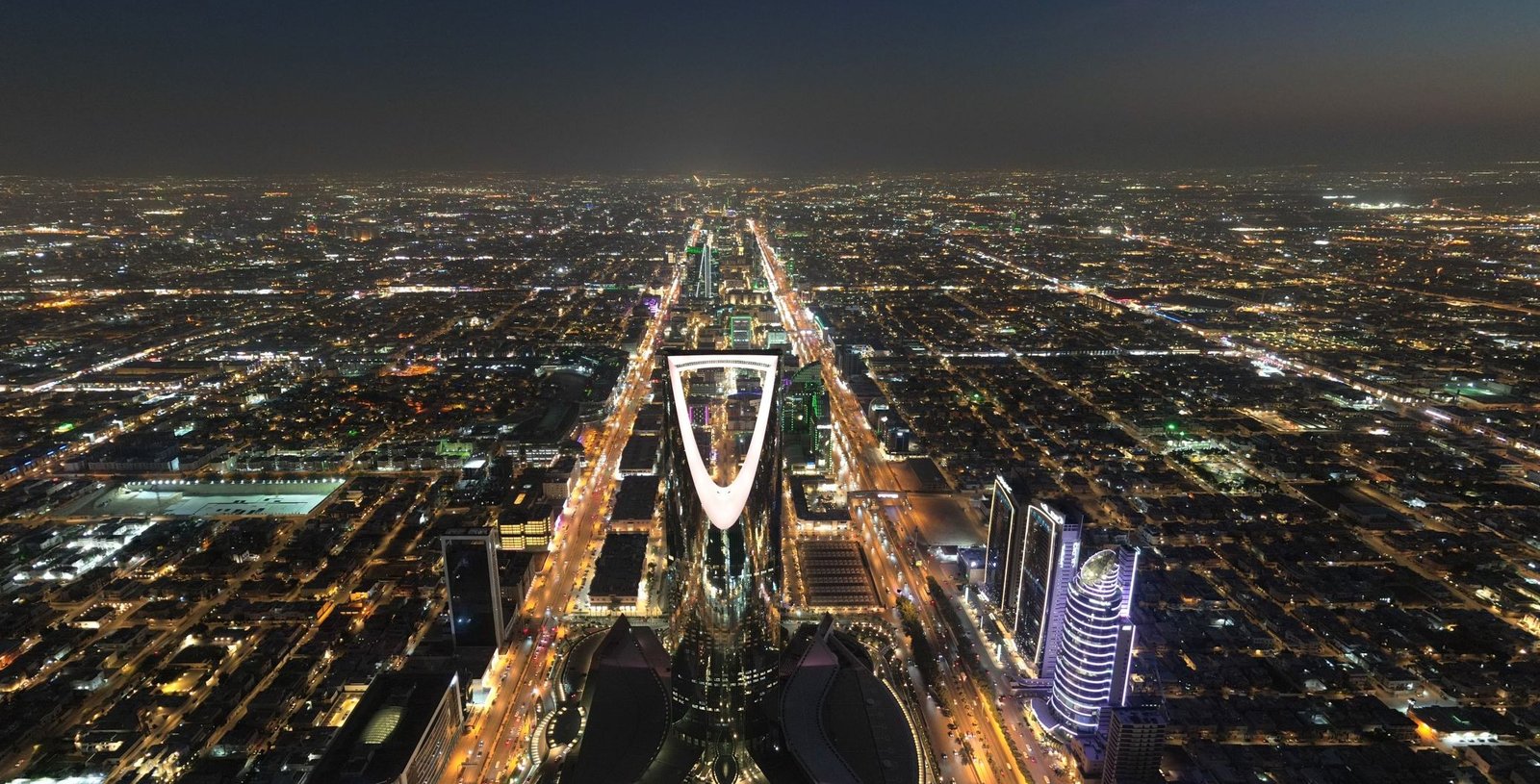
Saudi Arabia looks stronger than ever on paper. Huge cash reserves. A booming tourism sector. A sovereign wealth fund worth almost a trillion dollars. Yet on the ground, the kingdom is dealing with something it hasn’t faced in years: real diplomatic and military isolation. So why is Saudi Arabia being isolated in the Middle East right now, of all times?
So what’s actually going on? Let’s break it down piece by piece.
Why Trump Said No to Saudi Arabia
The Trump-Saudi Arabia-Houthi standoff started in September 2026, when Crown Prince Mohammed bin Salman called President Trump twice in a single day. The reason: Houthi rebels in Yemen were pushing toward the Bab al-Mandeb Strait, and Saudi-backed forces were losing ground. MBS asked for direct US airstrikes against the Houthis.
Trump said no. Both times.
The White House isn’t interested in opening a new military front right now. Its attention is on Iran and the Strait of Hormuz, not Yemen. Instead of strikes, the US offered something smaller: intelligence sharing and targeting data, on top of the roughly 200 US military personnel already stationed in Saudi Arabia for support.
Here’s what makes this interesting. Back in July 2026, MBS himself told Trump that Saudi Arabia could handle the Houthis alone. Two months later, he was asking for direct American firepower — and got turned down anyway.
Can Saudi Arabia Fight the Houthis Alone?
Technically, yes. Decisively winning? That’s a different question.
What works in Saudi Arabia’s favor:
- Its air force can now detect and respond to scattered threats much faster than before
- It spends more on defense than almost any other country in the region
- It already gets US intelligence and targeting support, even without direct military involvement
What doesn’t work in its favor:
- The Houthis don’t fight like a normal army. They use guerrilla tactics, drones, and missiles — the kind of asymmetric warfare that gives military planners nightmares
- Saudi Arabia already fought this exact war from 2015 to 2022, and it proved that military force alone doesn’t finish off the Houthis
- The Houthis seem to follow a pattern similar to North Korea: provoke, escalate, then use the tension to extract concessions
Most analysts expect this to turn into a long, grinding conflict rather than a quick victory for either side.
Good Diplomacy, So Why Does Saudi Arabia Look Weak?
This is a fair question. Saudi Arabia’s foreign policy — staying cautious, normalizing ties with Iran in 2023, avoiding open conflict — actually made sense on paper. So why does it look shaky from the outside?
A few reasons stand out.
First, depending on the US has become risky. Washington under Trump has been unpredictable. It didn’t respond when Iran attacked Saudi oil facilities back in 2019, and the same hesitation is showing up again now.
Second, Saudi Arabia is being pulled in too many directions at once. Iran, the Houthis, and now even its old ally the UAE are all putting pressure on it from different angles.
Third, Vision 2030 makes the kingdom risk-averse. Saudi Arabia has staked its future on economic transformation — tourism, foreign investment, diversification. A full-blown war could scare off investors and damage that progress, so caution makes financial sense even if it looks like weakness politically.
Fourth, the battlefield reality hasn’t changed. Even with a strong conventional military, beating an asymmetric enemy like the Houthis has historically been extremely hard.
Put simply: this is a case of good intentions running into bad options.
So, Why Is Saudi Arabia Being Isolated in the Middle East?
There’s no single mastermind here. It’s more like several players pushing in the same direction for their own reasons.
1. The UAE — once an ally, now a rival The UAE used to be Saudi Arabia’s closest partner in the Gulf. Not anymore. In Yemen, Saudi forces have clashed with UAE-backed separatist groups, and the rivalry has spilled into Sudan, Somalia, Syria, and even policy toward Israel. This tension is quietly weakening the Gulf Cooperation Council as a whole.
2. The US — a partner you can’t fully rely on Getting turned down on the Houthi strikes wasn’t a one-off. The same thing happened in 2019 after the Iran attack.
3. Iran and the Houthis — pressure from the front line Missile attacks and threats to naval shipping routes keep Saudi Arabia on edge from a completely different direction.
4. The bigger picture — America’s shrinking footprint Both Saudi Arabia and the UAE are trying to become independent “middle powers” because they can no longer count on the US the way they used to. That uncertainty is pushing each country to build its own alliances and strategies, which is fragmenting the region rather than uniting it.
How Long Can Saudi Arabia Handle This Pressure?
If there’s one place the Saudi Arabia economy in 2026 still looks strong, it’s here.
The economy has deep reserves.
- Foreign exchange reserves sit at roughly $438.5 billion
- The Public Investment Fund, the country’s sovereign wealth fund, manages over $925 billion
- Yes, the budget deficit hit around $33.5 billion in the first quarter of 2026 alone. But the IMF itself points out that low government debt and massive reserves give Saudi Arabia real cushioning
- Oil exports are still running at 60–70% of pre-crisis levels
Diplomatically, legitimacy is the real asset. The UAE can mobilize proxy forces, but Saudi Arabia still holds international legitimacy and strategic depth that money can’t easily buy.
Life on the ground looks normal. A football final in Jeddah recently drew 60,000 fans, even while neighboring countries were canceling public events over security concerns.
But there’s a time limit. Saudi Arabia can likely absorb this pressure comfortably for a year or two. If the Strait of Hormuz disruption drags on into 2027, the fiscal picture gets a lot more serious, and Vision 2030 might have to slow down. The real danger isn’t the economy — it’s the possibility of fighting on three fronts (Iran, the Houthis, and the UAE) at the same time. No country manages that well for long.
Where Does Saudi Arabia’s Money Actually Come From?
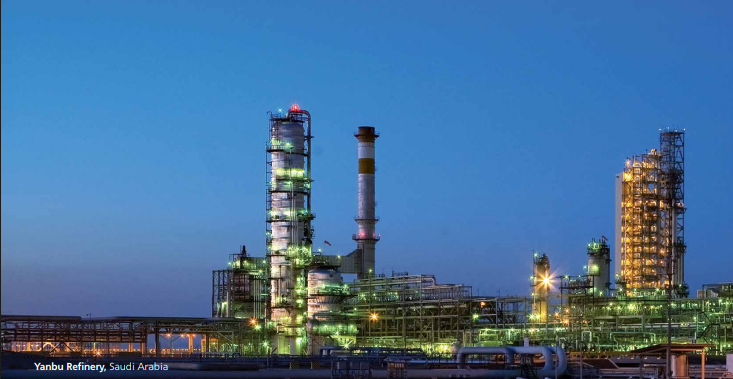
To really understand the Saudi Arabia economy in 2026, you have to look at where the money comes from. Total government revenue is projected at around $305 billion, with a GDP close to $1.1 trillion. Here’s how it breaks down.
Oil — still about 60% of revenue Crude exports through Aramco remain the single biggest source, though the share keeps shrinking as diversification continues.
Non-oil revenue — around 40%
- VAT and other taxes
- Tourism, which brought in roughly $81 billion in spending in 2025
- Wholesale trade, restaurants, and hotels
- Manufacturing, including pharmaceuticals, defense equipment, and EV batteries
- Financial services — banking, insurance, fintech
- Logistics, as Saudi Arabia tries to become a global shipping and trade hub
- Privatization proceeds, like the $11.2 billion raised from selling Aramco shares in 2024
- Returns from the PIF’s own investment portfolio
One trend worth noting: non-oil activity now makes up 55.6% of GDP, up from just 45.4% in 2016. Diversification is genuinely working — it’s just that government revenue collection still leans heavily on oil, since taxing crude is simpler than taxing a diversified private economy.
Saudi Non-Oil Exports: What Does Saudi Arabia Actually Sell?
Petrochemicals top the list. In 2024, petrochemical exports hit around $40 billion, making up 68% of all non-oil merchandise exports. SABIC, now one of the world’s largest chemical companies, anchors this industry, producing everything from polyethylene to fertilizers.
Plastics come next, worth roughly $9.6 billion, feeding into global packaging and consumer goods supply chains.
Organic chemicals add close to $6.6 billion, mostly as raw material for pharmaceuticals and further chemical processing.
Machinery and electrical equipment grew a striking 91.8% in 2025 — a sign Saudi Arabia is shifting from raw exports to manufactured goods.
Defense and shipbuilding is a newer but fast-growing category. Naval vessels alone account for close to $3 billion in exports, backed by local defense manufacturer SAMI.
Metals and mining round things out — gold exports worth about $2 billion, plus copper, aluminum, and jewelry. Saudi Arabia’s untapped mineral wealth is estimated at $2.5 trillion, so this sector is only getting started.
What Fruit Does Saudi Arabia Actually Export?
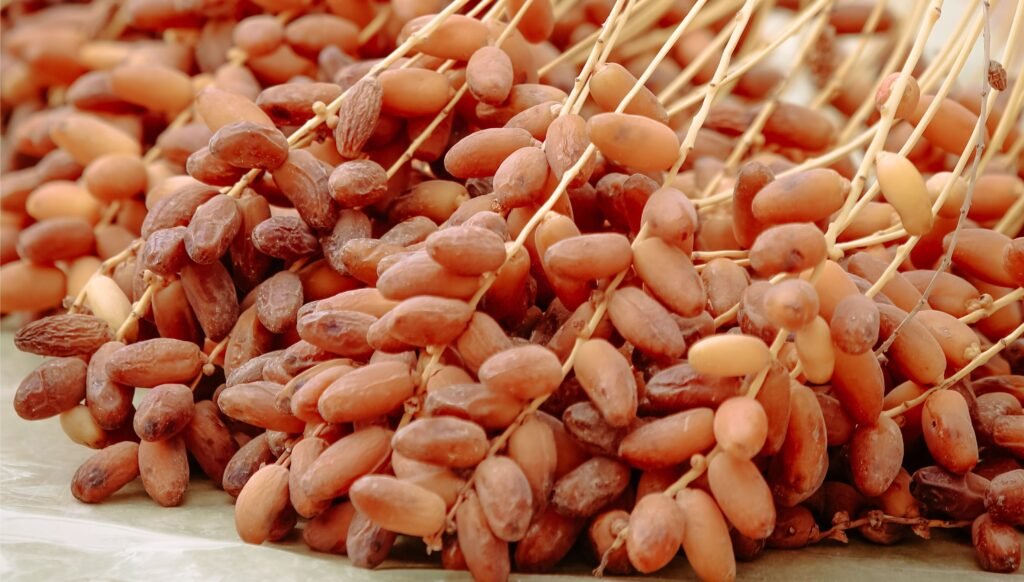
Here’s a fact most people don’t expect: Saudi Arabia’s fruit exports basically come down to one product — dates.
The kingdom is the world’s second-largest date producer, growing more than 1.5 million metric tons a year and shipping them to 107 countries. Premium varieties like Ajwa, Safawi, Medjool, and Sukkari are the ones you’ll usually find in export markets.
Almost everything else is a different story. Saudi Arabia actually imports over 70% of its fresh fruit because of its dry climate and limited water supply. Even watermelon, which it grows in large quantities domestically, is largely imported from Jordan, Yemen, and Egypt rather than exported.
How Many Tourists Visit Saudi Arabia Beyond Hajj and Umrah?
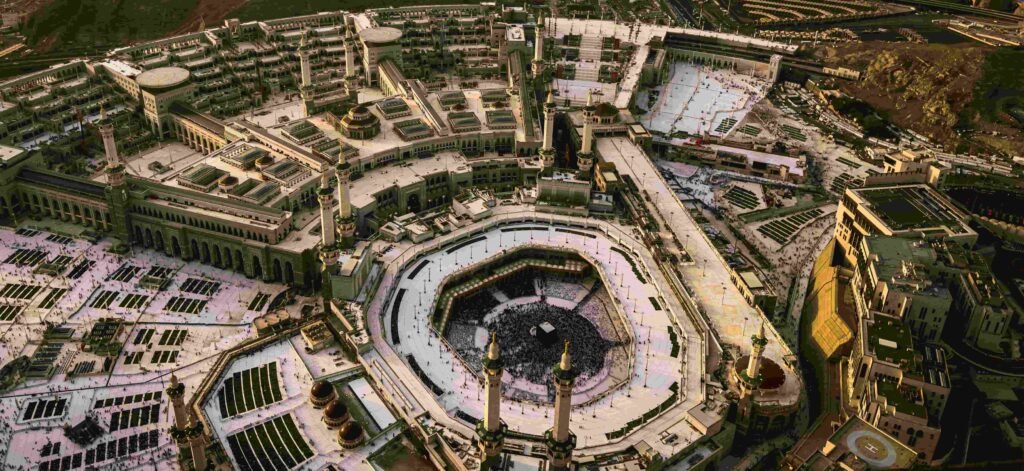
Saudi Arabia tourism numbers get a little tricky because categories overlap, but roughly:
- Total visits in 2025: 122 million (this includes domestic trips, religious travel, leisure, and business combined)
- International visitors: about 30.8 million
- Foreign Hajj and Umrah pilgrims combined: roughly 18–19 million
- Non-religious international tourists: somewhere around 10–13 million
This leisure and business segment is growing fast, driven by the Red Sea coastal resorts, the ancient sites of AlUla, Riyadh Season and Jeddah Season events, the Saudi Grand Prix, and the Diriyah heritage project.
One honest caveat: Saudi Arabia’s tourism data isn’t cleanly separated between religious and leisure travel, which makes some critics argue that a large chunk of the country’s tourism “growth” is really just Umrah and Hajj numbers rising, not a genuine leisure boom. Still, the target of 150 million total annual visits by 2030 shows how central tourism has become to the country’s economic plan.
The Bigger Picture
So, back to the original question: why is Saudi Arabia being isolated in the Middle East? The short answer is that it isn’t one thing — it’s Washington pulling back, the UAE competing instead of cooperating, and Iran, the Houthis, and Iraqi militias applying pressure from the front line, all at the same time.”
Saudi Arabia is stuck in an odd position right now. Militarily and diplomatically, it looks exposed — turned down by Washington, at odds with the UAE, and squeezed by Iran and the Houthis. Financially, though, it’s about as well-cushioned as any country in the region could hope to be.
The real question isn’t whether Saudi Arabia can survive the next year. It almost certainly can. The bigger test is whether its leadership can keep its patience while managing three tense fronts at once, without a single miscalculation triggering something bigger — and whether it can diversify its economy fast enough to handle whatever comes next.
This article reflects the situation as of September 2026. Given how fast things are moving in the region, expect this story to keep changing.
Sources
Trump-Saudi Houthi story
Turkey-Saudi relations
- Turkey and Saudi Arabia move from rivalry to strategic partnership — Middle East Eye
- Turkey-Saudi-Pakistan Agreement Is a Pact Without Impact — Foreign Policy
Iraq-Saudi relations
- Saudi, Iraqi foreign ministers discuss regional coordination — Arab News
- Saudi Arabia renews diplomatic efforts with Iraq — Semafor
- Saudi Defense Minister Calls Iraq ‘Cherished Neighbor’ — Kurdistan24
Economy, reserves and budget
- IMF Executive Board Concludes 2026 Article IV Consultation with Saudi Arabia
- Saudi forex reserves at 18-month high — Gulf News
- Saudi Arabia Posts Biggest Fiscal Deficit Since 2018 — Briefs
- Saudi Arabia GDP & Economy: Key Data & Analysis — House of Saud
Non-oil exports
- Saudi Arabia’s Non-Oil Exports Hit Record $137 Billion in 2024 — The Media Line
- Saudi non-oil exports jump 13% in 2024 — Gulf News
- From Oil to Chemicals, Electronics and Shipbuilding — Andaman Partners
Dates and fruit exports
- Saudi date production tops 1.9 million tonnes, exported to 119 countries — Gulf News
- Saudi dates continue to expand globally — National Center for Palms & Dates
Tourism