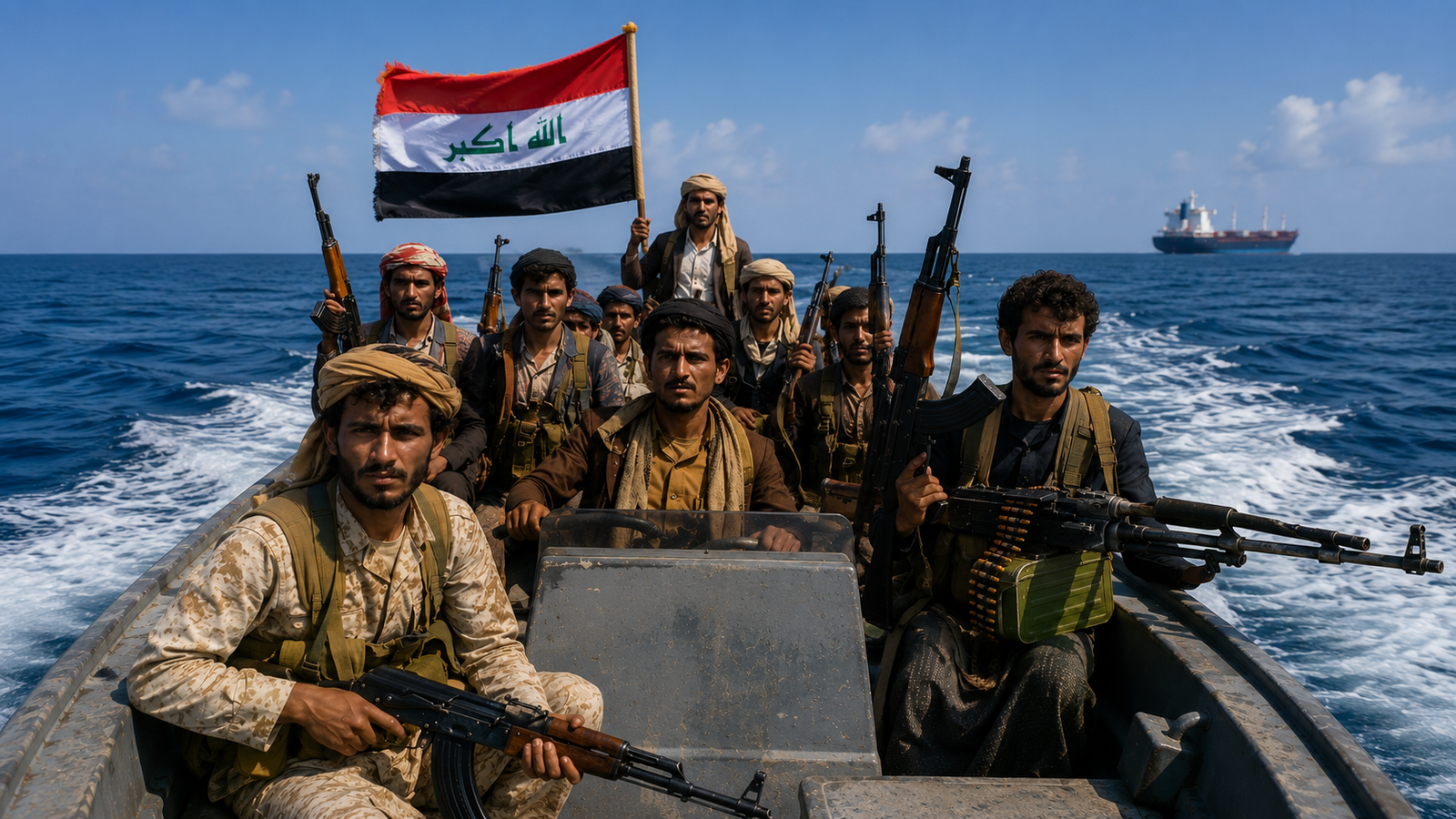
Who Are the Houthis?
The Houthis, officially called Ansar Allah, are a political and armed rebel group from Yemen that gets backing from Iran.
The movement gets most of its support from the Zaydis, a branch of Shia Islam found mainly in northern Yemen.
The group now controls Yemen’s capital, Sanaa, along with much of the country’s northern and western regions — areas where most of Yemen’s population lives.
Why Are the Houthis Fighting Saudi Arabia?
This conflict started in 2011, during the Arab Spring, when a rocket attack hit a mosque inside the presidential palace in Sanaa, badly injuring President Ali Abdullah Saleh.
He was flown to Saudi Arabia for treatment, and through a Gulf Cooperation Council (GCC)-brokered deal, his deputy, Abd Rabbuh Mansur Hadi, took over as the new president.
In 2014, when the Hadi government ended fuel subsidies, several tribal chiefs left the government and joined the rebels, turning the unrest into a full civil war — with the Houthis and allied tribes on one side, and the government on the other.
As a Shia group, the Houthis had long received support from Iran, and had grown more and more frustrated with the government.
Backed by Iran, the Houthis started nationwide protests.
When the government tried to crush the demonstrations using force, public anger grew even more.
In the middle of this chaos, Iran-trained Houthi fighters picked up arms, used the unrest to their advantage, and took control of the capital — overthrowing the internationally recognised government in the process.
In 2015, Saudi Arabia put together a military coalition with other countries to try to bring back Yemen’s government.
Saudi Arabia shares a long border with Yemen and has tried to keep the Houthis away from it.
Since the Houthis get political and military help from Iran, Saudi Arabia sees the group as an Iranian proxy near its border — and treats it as a direct threat to its national security.
This is why Saudi Arabia put a blockade on Houthi-held territory, to stop Iranian weapons from reaching the group. In response, the Houthis attacked Saudi Arabia’s Abha airport.
Why Are They Attacking Ships Now?
The Houthis are currently seen as fighting on Iran’s side in this wider regional conflict.
After the strike on Sanaa airport, the group announced a naval blockade, and hit back by attacking Saudi Arabia’s Abha airport.
This was followed by missile and drone attacks on two Saudi oil tankers, Encelia and Layla.
Analysts say that by threatening to control both Hormuz and Bab el-Mandeb, Iran might be trying to put pressure on the US — but in reality, it’s the Gulf countries that are paying the biggest price through this instability and these attacks.
What This Means for Global Shipping and Oil Prices
With both the Strait of Hormuz and the Red Sea now under threat, ships are being sent onto safer paths — many now sailing all the way around Africa, adding two to four weeks to their journeys.
These longer trips have pushed up fuel costs, and war-risk insurance premiums have also gone up.
Oil prices have already crossed $100 a barrel for the first time in two months, caused directly by the Houthi attacks on Saudi tankers, according to Rigzone.
Because supply routes are disrupted, oil is no longer reaching markets on time. Analysts warn that if the situation doesn’t get better soon, the world could face a fresh wave of inflation.
The impact on South Asia is likely to be especially bad, given how much the region depends on Middle Eastern energy imports.
Rising oil prices are already pushing up import bills for countries like India, Pakistan, and Bangladesh. According to World Bank Blogs, this energy shock could slow South Asia’s economic growth to 6.3% in 2026.
The shipping disruption has already pushed air freight cargo rates on routes like Delhi/Mumbai-London up by 57% to 69%, according to Hellenic Shipping News, while fuel surcharges on major shipping routes have gone up to nearly three times their usual levels.
Fuel supply shortages are already being reported in parts of the region, adding more strain on households that are already struggling with rising costs.
Conclusion
As tensions keep growing across the Red Sea and the Strait of Hormuz, the Houthi conflict has turned from a regional power struggle into a crisis with global effects.
With oil prices going up and shipping routes under threat, the next few weeks will be important in deciding whether diplomatic efforts can calm the situation down — or whether the world faces a long period of instability and higher costs.