
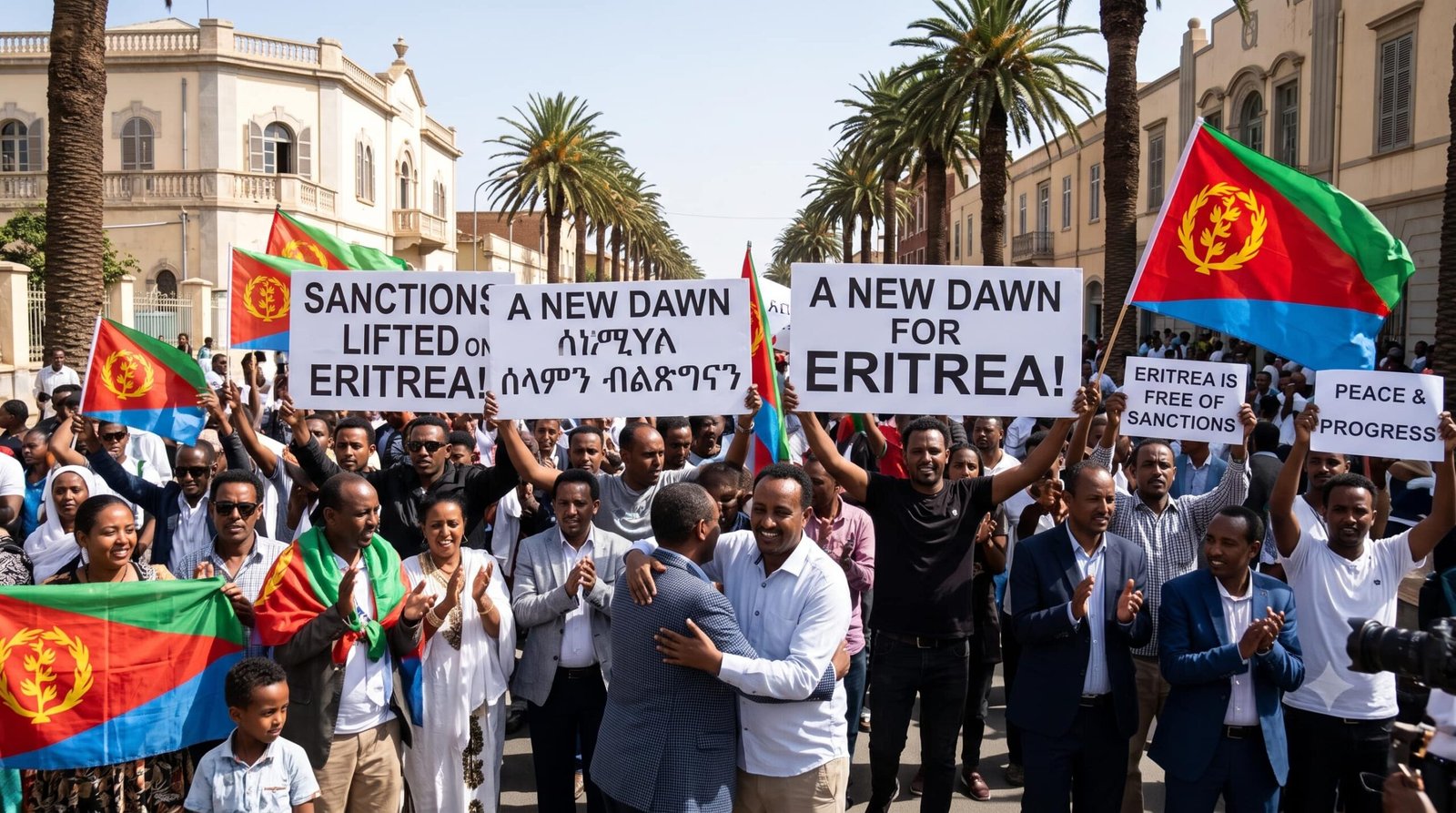
As the US lifts sanctions on Eritrea, Washington quietly closed a five-year chapter of its Horn of Africa policy this week. On Friday, the US Treasury confirmed it had removed sanctions on Eritrea’s ruling party and military — a move that landed with far less fanfare than the geography behind it deserves.
What Actually Happened When the US Lifts Sanctions on Eritrea
The US had sanctioned Eritrea’s People’s Front for Democracy and Justice (PFDJ) — the country’s only legal political party — along with the Eritrean Defense Forces, the state-linked Red Sea Trading Corporation, and several senior officials, including finance official Hagos Ghebrehiwet. These sanctions traced back to a national emergency President Biden declared in September 2021, at the height of Ethiopia’s Tigray war, when Eritrean forces were accused of atrocities while fighting alongside the Ethiopian army.
That national emergency simply expired on September 18, 2026. The Trump administration chose not to renew it — something it had renewed as recently as last year — with the State Department framing the decision as a move “to advance US regional interests” along the Red Sea.
It’s worth being precise about what this is and isn’t. Treasury’s notice doesn’t describe any new political agreement with Eritrea, and it doesn’t amount to an endorsement of the Eritrean government. It’s tied specifically to the underlying legal authority running out — not a negotiated breakthrough.
Why the Timing Lines Up With the War
Two things changed on the ground since 2021, and both point toward the same conclusion.
First, the war that triggered the sanctions is over. Ethiopia’s federal government and Tigrayan forces signed the Pretoria peace accord in November 2022, ending the large-scale fighting that had prompted Washington’s original response. Relations across the Ethiopia-Eritrea-Tigray triangle remain tense, but the acute crisis has passed.
Second, and far more consequential for this blog’s usual beat: the Red Sea has become dramatically more important to global shipping over the past year. With the Strait of Hormuz effectively choked by the Iran war, more oil and cargo traffic has been forced through the Red Sea and the Bab el-Mandeb Strait instead — the same corridor now increasingly threatened by Houthi advances in Yemen, including the recent capture of Mokha. This explains why the US lifts sanctions on Eritrea now: maintaining a blanket sanctions regime against a country sitting on the western shore of that exact chokepoint stopped making strategic sense to Washington.
Why Eritrea’s Coastline Matters So Much Right Now
Eritrea controls more than 1,000 kilometers of Red Sea coastline, including the ports of Massawa and Assab. Assab in particular sits close to the mouth of the Bab el-Mandeb Strait — the narrow passage connecting the Red Sea to the Gulf of Aden, and from there to the Arabian Sea and Indian Ocean.
With Western naval coalitions already stretched thin trying to protect shipping from Houthi attacks, having a cooperative — or at least non-hostile — coastal state on the strait’s western side has real operational value: better radar coverage, easier logistics, fewer diplomatic dead ends when incidents happen near Eritrean waters.
How Eritrea Responded
Asmara treated the move as vindication it had been waiting years for. Information Minister Yemane Gebremeskel said the original sanctions were unwarranted and had caused considerable damage to the country, adding that Eritrea welcomed the Trump administration’s decision.
That reaction glosses over a harder reality: the sanctions were imposed after documented reports of massacres, looting, and sexual violence by Eritrean forces in Tigray, according to the Treasury’s own 2021 findings. Their removal now is about a legal technicality and shifting regional priorities — not a retroactive judgment that the original human rights concerns were unfounded.
The Bigger Picture
Even as the US lifts sanctions on Eritrea, this isn’t a story about Washington and Asmara suddenly becoming close partners. This isn’t a story about Washington and Asmara suddenly becoming close partners. Ethiopia-Eritrea tensions remain unresolved, and the Treasury’s own language is careful not to frame this as a reset. What it does show is how thoroughly the Iran war and the Hormuz blockade have reordered US priorities across an entire region — turning a quiet, low-profile Horn of Africa sanctions program into collateral diplomatic adjustment, simply because the map next to it changed.
For a country most Americans couldn’t place on a map two years ago, Eritrea’s coastline just became a lot more relevant to how oil moves around the world.
1 thought on “US Lifts Sanctions on Eritrea — Why Now, and Why the Red Sea Matters”