
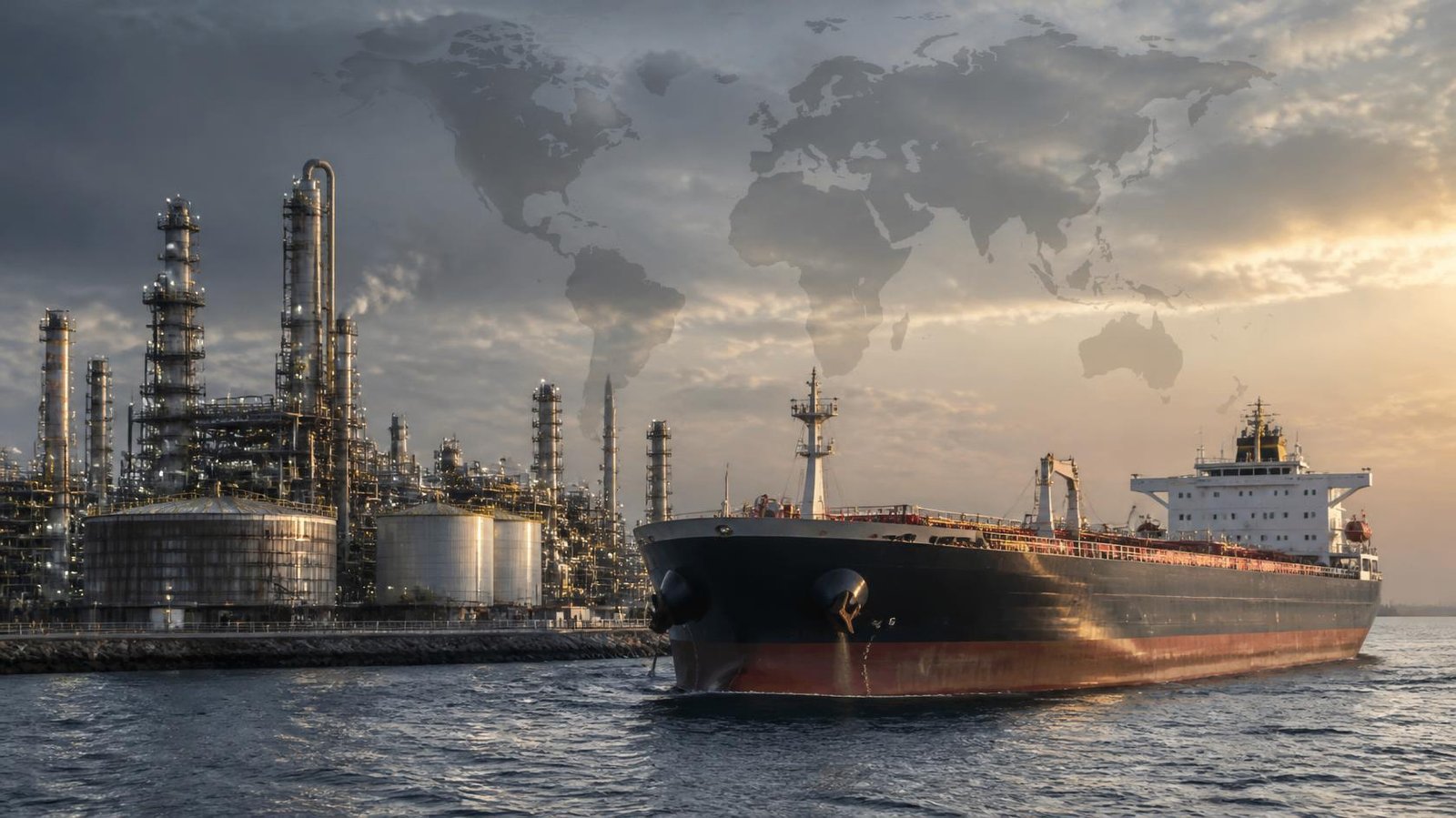
Petroleum—what most of us simply call crude oil—is a dark liquid fuel formed over millions of years. Deep underground, heat and immense pressure slowly cooked the remains of ancient microscopic plants and marine life trapped under thick rock and sediment.
Today, this single raw material runs almost everything in global commerce, from daily transport to industrial manufacturing.
From Raw Crude to Refined Products
You cannot pump raw crude straight into an engine or machine. First, it goes to a refinery. Refineries heat the crude to boil and separate it into different usable layers based on their weight and boiling point.
The lighter parts turn into gasoline, naphtha, and cooking gas (LPG). The middle cuts become jet fuel, kerosene, and diesel. The thickest, heaviest leftovers at the bottom are processed into motor oil, industrial lubricants, and the asphalt laid on roads.
Where Does All This Oil Actually Go?
Most people think of oil strictly as fuel, but it actually has two main jobs: generating energy and supplying raw chemical materials.
Transportation takes up the biggest slice. Daily commutes, long-haul trucking, commercial flights, and cargo ships all run primarily on petroleum fuels. In factories, heavy machinery relies on oil-based lubricants to keep parts moving smoothly without grinding or overheating.
Beyond energy, petroleum is practically everywhere around us. Chemical feedstocks derived from oil make the plastics in our phones, packaging, synthetic clothes like polyester and nylon, paints, detergents, and even key components in medicines.
Why Oil Moves Entire National Economies
Because oil sits at the root of transport and production, it shapes national budgets and international trade balances.
- Oil-Exporting Nations: Countries that pump and sell oil abroad use these revenues to fund government budgets, build national infrastructure, and build up foreign exchange reserves. Over the long run, their success depends on whether they reinvest these profits into diversifying their local economy.
- Oil-Importing Nations: Countries that rely on imports must spend huge amounts of foreign currency to secure fuel. When prices jump, their import bills soar, their trade deficits widen, and their local currencies often lose value against the dollar.
What Happens When Global Oil Prices Spike?
When crude prices jump on global markets, the pain spreads quickly through supply chains:
- Shipping costs rise first: Gas stations raise pump prices, and freight operators charge more to move goods.
- Factory costs increase: Manufacturers pay higher bills for raw plastics, chemical inputs, and plant energy.
- Consumer prices follow: Businesses pass these extra logistics and production costs directly to consumers, driving up the price of groceries, clothes, and everyday essentials.